Library › Special populations and systemic disease › Substance use and the heart
Alcohol, stimulants, and other substance use and the heart
The cardiovascular effects of alcohol, stimulants, cannabis, opioids, anabolic steroids, inhalants, and emerging substances in adults, with screening, testing, addiction treatment, and harm reduction in cardiac care.
Substance use is a cardiovascular exposure measured like any other risk factor. Excluding tobacco, alcohol accounts for most substance-related cardiovascular deaths in the United States, and these deaths rose by about 4% a year from 1999 to 2019 while overall cardiovascular mortality fell (Minhas 2024). Drinking 3 or more drinks a day or binge drinking is associated with worse outcomes in all cardiovascular diseases studied, and the 2025 American Heart Association (AHA) statement advises against starting to drink for cardiovascular protection (Piano 2025). Methamphetamine causes heart failure, in which ventricular function can recover with abstinence, and pulmonary arterial hypertension, which carries poor survival. Methadone prolongs the QT interval. For people who use these substances, treatment of the substance use disorder is a cardiovascular therapy.
Substance use as a cardiovascular exposure: scope and burden
Alcohol, stimulants, cannabis, opioids, anabolic-androgenic steroids, inhalants, and a changing list of novel compounds act on the heart through a small number of mechanisms: sympathetic activation, ion-channel blockade, direct myocyte toxicity, vascular and endothelial injury, and the infections and emboli that follow injection. The same patient often uses several substances together with tobacco, so a cardiac presentation rarely has one cause.
Mortality. From 1999 to 2019, US death certificates recorded 636,572 deaths with both substance use and cardiovascular disease as causes. Alcohol was involved in 65% of them. The age-adjusted rate rose from 9.9 to 21.4 per 100,000, with an average annual increase of 4.0%. Men had the highest rates, and the steepest increases were in women, American Indian and Alaska Native people, younger adults, residents of rural areas, and people who used cannabis or psychostimulants (Minhas 2024). The analysis excluded tobacco. Overdose is the leading cause of death in people with opioid and stimulant use disorders. Final Centers for Disease Control and Prevention (CDC) data recorded 79,384 overdose deaths in 2024, down from 105,007 in 2023. Deaths involving psychostimulants such as methamphetamine fell from 34,855 to 28,722, and deaths involving cocaine fell from 29,449 to 21,945 (Garnett 2026). Many of these deaths involved more than one drug.
Clinical consequence. A substance is a candidate cause in a young adult with myocardial infarction, stroke, aortic dissection, cardiomyopathy, atrial fibrillation, pulmonary hypertension, endocarditis, or cardiac arrest, and in an older adult whose heart failure, blood pressure, or rhythm does not respond as expected. Substance use also changes how standard therapy is chosen: anticoagulation in a person with alcohol use disorder, a beta-blocker during stimulant intoxication, a QT-prolonging drug in a patient taking methadone, and a prosthetic valve in a person who injects drugs.
| Substance | Main cardiovascular mechanisms | Principal cardiovascular effects in adults |
|---|---|---|
| Alcohol | Dose-dependent pressor effect; direct myocyte toxicity of ethanol and acetaldehyde; atrial electrical and structural remodeling | Hypertension, atrial fibrillation, alcoholic cardiomyopathy, hemorrhagic and ischemic stroke, hypertriglyceridemia, wet beriberi |
| Cocaine | Blocks reuptake of norepinephrine, dopamine, and serotonin; blocks sodium and potassium channels; activates platelets | Vasospasm and myocardial infarction, aortic dissection, wide-complex and ventricular arrhythmias, left ventricular hypertrophy, accelerated atherosclerosis |
| Methamphetamine and other amphetamines | Release of catecholamines from nerve terminals; oxidative injury | Dilated cardiomyopathy, pulmonary arterial hypertension, acute coronary syndrome, stroke, hypertensive emergency |
| Cannabis (tetrahydrocannabinol) | CB1 receptor activation with sympathetic stimulation; combustion products when smoked | Tachycardia, myocardial infarction, atrial fibrillation, stroke; severe toxicity with synthetic cannabinoids |
| Opioids | Respiratory depression and hypoxia; vagal bradycardia; hERG blockade by methadone and loperamide | Hypoxic cardiac arrest, QT prolongation and torsades de pointes, central sleep apnea, endocarditis with injection |
| Anabolic-androgenic steroids | Supraphysiologic androgen exposure | Reduced systolic and diastolic function, coronary plaque, low HDL cholesterol, erythrocytosis, hypertension, sudden death |
| Inhalants (solvents, fuels, aerosol propellants) | Myocardial sensitization to catecholamines | Ventricular fibrillation during use (sudden sniffing death) |
| Nitrite inhalants | Nitric oxide-mediated vasodilation; methemoglobinemia | Hypotension, profound hypotension with phosphodiesterase-5 inhibitors |
| MDMA and synthetic cathinones | Serotonin and catecholamine release; 5-HT2B agonism | Hypertension, hyperthermia, hyponatremia, arrhythmia, valvular regurgitation with heavy use |
| Kratom | Mu-opioid agonism by mitragynine and 7-hydroxymitragynine; adrenergic effects | Tachycardia, hypertension, reported QT prolongation, opioid-type toxicity with concentrated products |
Mechanisms and cardiovascular effects of commonly used substances. HDL, high-density lipoprotein; MDMA, 3,4-methylenedioxymethamphetamine.
Taking a substance-use history and stigma-free communication
People disclose substance use to clinicians who ask plainly, without judgment, and who explain why the answer matters to the heart. Shame and fear of being refused care, reported to the police, or removed from a transplant list lead to underreporting. Stigmatizing words in notes travel with the patient: they shape how the next clinician treats pain, interprets chest pain, and decides on surgery. The AHA statement on endocarditis in people who inject drugs frames the infection as a complication of a treatable substance use disorder and places addiction care inside cardiac care (Baddour 2022).
Language. Person-first and clinical terms describe a behavior or a diagnosis without assigning character. "Substance use disorder," "alcohol use disorder," and "opioid use disorder" are Diagnostic and Statistical Manual of Mental Disorders, Fifth Edition (DSM-5) diagnoses graded mild, moderate, or severe. A patient "uses cocaine," "has a positive urine test for amphetamines," or "is in remission." Medications for opioid use disorder are treatment, not "replacement" or "substitution."
| Term to avoid | Clinical alternative |
|---|---|
| Addict, abuser, user, junkie, alcoholic | Person who uses drugs; person with alcohol use disorder or opioid use disorder |
| IVDU, IVDA (intravenous drug user, intravenous drug abuse) | Person who injects drugs (PWID); injection drug use |
| Drug abuse, substance abuse | Substance use; nonmedical use; substance use disorder (when criteria are met) |
| Clean or dirty (person or urine test) | In remission or not using; negative or positive test result |
| Opioid replacement or substitution therapy | Medication for opioid use disorder; opioid agonist treatment |
| Drug-seeking | Requesting medication; untreated pain or withdrawal (with a description of the behavior) |
| Noncompliant | Not taking the medication, with the stated reason |
Non-stigmatizing terminology for clinical notes and conversation, consistent with US addiction medicine and federal agency usage.
Content of the history. A cardiac substance history records the substances used and their routes. The substances are alcohol, tobacco and nicotine products, cannabis, cocaine, methamphetamine, prescription stimulants, opioids (including methadone, buprenorphine, and loperamide), kratom, anabolic steroids, sedatives, inhalants, and supplements; the routes are oral, smoked, vaped, intranasal, and injected. It also records quantity, frequency, and pattern, including binges; time since last use, which governs acute risk and withdrawal; prior overdose, endocarditis, seizures, or withdrawal complications; and current or past treatment. For alcohol, quantity is recorded in standard drinks and grams. In a person who injects drugs, questions about injection sites, shared equipment, groin or neck injection, and access to sterile supplies and naloxone guide both the cardiac evaluation and the discharge plan. Collateral history from family, emergency medical services, and the prescription drug monitoring program fills gaps when the patient is too ill to answer.
The standard drink and categories of alcohol use
A US standard drink contains 14 g of pure alcohol (0.6 fl oz): 12 fl oz of regular beer at about 5% alcohol, 5 fl oz of table wine at about 12%, or 1.5 fl oz of 80-proof (40%) distilled spirits (Piano 2025). Drink sizes poured at home and in restaurants are often larger, and craft beers, fortified wines, and mixed drinks commonly contain 1.5 to 3 standard drinks per serving. Definitions differ by country (for example, the UK unit contains 8 g and the Canadian standard drink about 13.5 g), so the grams per day or per week reported in a study are converted before its results are applied. The randomized abstinence trial in atrial fibrillation used a 12-g drink (Voskoboinik 2020).
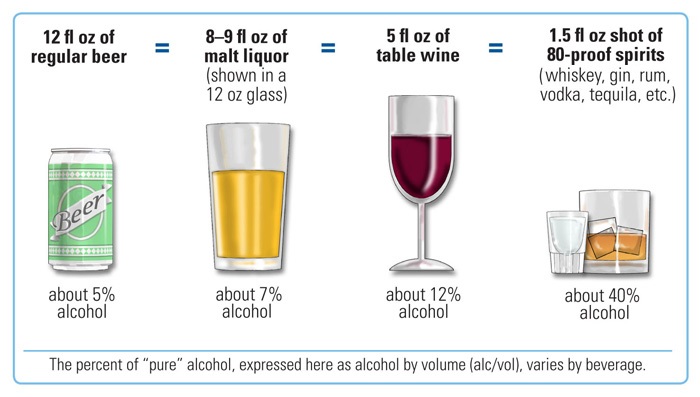
US standard drink equivalents, which contain about 14 g of alcohol per drink; the percentage of alcohol varies within a beverage type. Credit: National Institutes of Health, National Institute on Alcohol Abuse and Alcoholism, via Wikimedia Commons. Public domain.

| Category | Definition used in US practice | Source |
|---|---|---|
| Standard drink | 14 g alcohol | NIAAA; AHA 2025 |
| Low intake in cardiovascular studies | No more than 1 to 2 drinks a day | AHA 2025 statement |
| Heavier intake | An average of 3 or more drinks a day | AHA 2025 statement |
| Binge drinking | 5 or more drinks for men or 4 or more for women within about 2 hours, raising blood alcohol to about 0.08% | NIAAA; AHA 2025 |
| Heavy drinking | More than 4 drinks on any day or more than 14 a week for men; more than 3 on any day or more than 7 a week for women | NIAAA |
| Unhealthy alcohol use | The spectrum from risky drinking to alcohol use disorder | USPSTF 2018 |
| Alcohol use disorder | DSM-5 diagnosis based on 11 criteria; 2 or 3 mild, 4 or 5 moderate, 6 or more severe | DSM-5 |
Definitions of alcohol intake. NIAAA, National Institute on Alcohol Abuse and Alcoholism; USPSTF, US Preventive Services Task Force.
Screening for unhealthy alcohol use: AUDIT-C, the single question, and the USPSTF
The US Preventive Services Task Force recommends screening for unhealthy alcohol use in primary care for adults aged 18 years or older, including pregnant women, and brief behavioral counseling for those who screen positive (grade B) (Curry 2018). Screening applies with equal force in cardiology, where alcohol is a modifiable cause of hypertension, atrial fibrillation, cardiomyopathy, and bleeding on anticoagulation.
AUDIT-C. The three consumption questions of the Alcohol Use Disorders Identification Test ask how often the patient drinks, how many drinks are consumed on a typical drinking day, and how often 6 or more drinks are consumed on one occasion; all three are scored 0 to 4 (Bush 1998). The cutoffs used by the USPSTF are 4 or more for men and 3 or more for women. Higher scores track heavier use and a greater likelihood of alcohol use disorder, and a positive screen is followed by the full 10-item AUDIT or a DSM-5 assessment.
Single alcohol screening question. The question asks, "How many times in the past year have you had 5 or more drinks in a day?" (4 or more for women and for all adults older than 65 years). One or more such days is a positive screen.
Brief intervention. For risky drinking without alcohol use disorder, brief counseling links the patient's own cardiac diagnosis (blood pressure, atrial fibrillation burden, ejection fraction) to a specific reduction target and arranges follow-up. Patients with moderate or severe alcohol use disorder are offered pharmacotherapy and referral, as described under treatment of alcohol use disorder.
Urine toxicology and alcohol biomarkers in cardiac presentations
Testing complements the history; it does not replace it. Point-of-care and laboratory immunoassays detect drug classes at defined cutoffs and do not identify individual drugs, and confirmatory testing by gas or liquid chromatography with mass spectrometry identifies the compound (Moeller 2017). Results are interpreted against the detection window, the assay's cross-reactivity, and the clinical question.
| Test | Target | Approximate detection window | Interpretation in cardiac care |
|---|---|---|---|
| Cocaine immunoassay | Benzoylecgonine | 2–4 days; longer after heavy use | Specific for cocaine; topical cocaine used in ENT procedures also produces a positive result |
| Amphetamine immunoassay | Amphetamine, methamphetamine | 1–4 days | Cross-reacts with pseudoephedrine, bupropion, labetalol, trazodone, and others; prescribed amphetamines are positive; confirmation separates d- and l-isomers |
| Cannabinoid immunoassay | THC-COOH | Days after occasional use; several weeks after daily use | Indicates exposure only; cannot establish intoxication or recent use |
| Opiate immunoassay | Morphine and codeine | 1–3 days | Does not reliably detect fentanyl, methadone, buprenorphine, oxycodone, or tramadol; these need specific assays |
| Fentanyl immunoassay | Fentanyl and norfentanyl | 1–3 days | Separate test; misses many fentanyl analogs |
| Methadone and buprenorphine assays | Parent drug or metabolites | Several days | Confirm adherence to medication for opioid use disorder |
| Blood or breath ethanol | Ethanol | Hours | Documents intoxication; level does not predict cardiac toxicity |
| Urine ethyl glucuronide and ethyl sulfate | Ethanol metabolites | Up to about 80 hours | Recent drinking; incidental exposure from hand sanitizer can produce low positives |
| Blood phosphatidylethanol (PEth 16:0/18:1) | Ethanol-derived phospholipid in red cell membranes | About 2–4 weeks | Below 20 ng/mL consistent with abstinence or low intake; 200 ng/mL or more indicates excessive consumption (Luginbühl 2022) |
Detection windows are approximate and lengthen with heavy or prolonged use, high doses, and reduced kidney function (Moeller 2017). THC-COOH, 11-nor-9-carboxy-tetrahydrocannabinol; ENT, ear, nose, and throat.
When testing helps. Toxicology is obtained in chest pain or infarction in a young adult, unexplained cardiomyopathy, new pulmonary arterial hypertension, wide-complex or polymorphic ventricular arrhythmia, aortic dissection in a patient younger than 50 years, hypertensive emergency, and cardiac arrest. The patient is told what is being tested and why. A positive test changes acute management (for example, beta-blocker timing after stimulant exposure), the etiologic diagnosis (methamphetamine cardiomyopathy), and the discharge plan. A negative test does not exclude recent use of compounds outside the panel, including synthetic cannabinoids, synthetic cathinones, kratom, xylazine, and medetomidine. In transplant and ventricular assist device programs, phosphatidylethanol and drug screens document abstinence, as described under transplant candidacy.
Moderate drinking and the J-shaped curve
For decades, observational cohorts reported a J-shaped or U-shaped relation between alcohol intake and coronary heart disease: people who drank about 1 to 2 drinks a day had fewer coronary events than nondrinkers, and people who drank more had more events. Proposed mechanisms included higher high-density lipoprotein (HDL) cholesterol, lower fibrinogen and platelet aggregation, and improved insulin sensitivity.
The largest individual-participant analysis restricted to current drinkers included 599,912 people without cardiovascular disease in 83 prospective studies. All-cause mortality rose curvilinearly with intake, with the lowest risk at or below about 100 g a week. An additional 100 g a week was associated with a higher risk of stroke (hazard ratio [HR] 1.14), coronary disease excluding myocardial infarction (HR 1.06), heart failure (HR 1.09), fatal hypertensive disease (HR 1.24), and fatal aortic aneurysm (HR 1.15). Myocardial infarction alone showed a log-linear inverse association with intake (Wood 2018). The analysis therefore placed the threshold for lowest overall risk below the limits that several national guidelines then allowed.
The 2025 AHA statement summarizes the evidence as showing no risk to possible risk reduction at low intake (no more than 1 to 2 drinks a day) for coronary artery disease, stroke, sudden death, and possibly heart failure. The effect of 1 to 2 drinks a day on atrial fibrillation is unknown, and binge drinking or an average of 3 or more drinks a day is associated with consistently worse outcomes in all cardiovascular diseases. Because most of the evidence is observational, the statement concludes that it is unknown whether drinking is part of a healthy lifestyle (Piano 2025). No randomized trial has tested whether moderate drinking reduces cardiovascular events.
Sick-quitter bias, abstainer misclassification, and confounding
The apparent benefit of moderate drinking depends heavily on who is placed in the reference group. Three biases enlarge it.
Sick-quitter bias. Many people stop drinking because of illness, medication, or alcohol-related harm. When former drinkers are grouped with lifetime abstainers, the reference group carries excess risk, and moderate drinkers appear protected (Stockwell 2016).
Abstainer misclassification and healthy-drinker effects. Occasional drinkers are sometimes classed as abstainers, and people who drink moderately differ systematically from abstainers in income, education, physical activity, diet, body weight, and access to care. In the UK Biobank, people who drank lightly to moderately had healthier lifestyles, and adjustment for these factors attenuated the cardioprotective association (Biddinger 2022).
Effect of correcting the biases. A meta-analysis of 107 cohort studies with 4.8 million participants adjusted for former-drinker bias and study quality. Occasional drinkers (relative risk [RR] 0.96) and low-volume drinkers consuming 1.3 to 24 g a day (RR 0.93) had no significant reduction in all-cause mortality compared with lifetime nondrinkers. Risk rose significantly at 45 to 64 g a day (RR 1.19) and at 65 g or more (RR 1.35), and women who drank had higher mortality than women who had never drunk (Zhao 2023). Other limitations of the observational literature include single baseline measurement of intake, underreporting, and averaging of steady and binge patterns that carry different risks.
Mendelian randomization evidence on alcohol and cardiovascular disease
Mendelian randomization uses inherited variants that change alcohol intake as instruments that are largely free of lifestyle confounding. Two variants dominate. The ADH1B rs1229984 A allele accelerates ethanol oxidation to acetaldehyde, and the ALDH2 rs671 allele, common in East Asian populations, slows acetaldehyde clearance; both produce unpleasant reactions and lower intake.
In 261,991 people of European descent, carriers of the ADH1B variant drank 17.2% less and binged less. They had lower systolic blood pressure, lower body mass index, lower interleukin-6, and lower odds of coronary heart disease (odds ratio [OR] 0.90), including among light to moderate drinkers (Holmes 2014). In 161,498 genotyped adults in the China Kadoorie Biobank, self-reported intake showed the expected U-shaped associations with stroke and myocardial infarction among men. Genotype-predicted intake, ranging from near zero to about 4 drinks a day, showed no U shape. Stroke risk rose continuously, more steeply for intracerebral hemorrhage (RR 1.58 per 280 g a week) than for ischemic stroke. Genetic evidence for myocardial infarction was inconclusive (Millwood 2019). In 371,463 UK Biobank participants, genetically predicted intake was associated with hypertension and coronary artery disease. Nonlinear analyses showed minimal added risk at light intake and an exponential rise at higher intake (Biddinger 2022).
Mendelian randomization has its own limitations: the instruments affect acetaldehyde exposure as well as intake, pleiotropy cannot be fully excluded, and the analyses estimate the effect of lifelong differences in intake. The 2025 AHA statement notes that Mendelian randomization and trial-emulation studies point in different directions for light drinking (Piano 2025). The genetic evidence does not support a protective effect of alcohol and shows that harm rises with intake, steeply above about 2 drinks a day.
Alcohol and blood pressure
Alcohol raises blood pressure in a dose-dependent way, and it is among the most common reversible causes of hypertension and of loss of control. Mechanisms include sympathetic activation, activation of the renin-angiotensin-aldosterone system, increased cortisol, endothelial dysfunction, and baroreflex impairment. A single episode of drinking can lower pressure for several hours through vasodilation and then raise it the next day, so the timing of measurement matters.
Compared with 1 drink a day, 2, 3, and 4 drinks a day raise the risk of incident hypertension by about 11%, 22%, and 33%, and abstainers have the lowest risk. Halving intake lowers pressure by about 5.5/4.0 mm Hg in heavy drinkers. The 2025 AHA/American College of Cardiology (ACC) hypertension guideline recommends that alcohol be avoided or limited to at most 1 standard drink a day for women and 2 for men; abstinence is optimal, and a reduction of more than 50% lowers systolic pressure by about 4 to 6 mm Hg. The full lifestyle program is described in lifestyle treatment of hypertension, and alcohol appears with stimulants and other pressor agents among the drugs and substances that raise blood pressure. Heavy drinking in a patient with resistant hypertension is identified with the AUDIT-C, and phosphatidylethanol confirms intake when the history is uncertain.
Alcohol and coronary heart disease, stroke, heart failure, and sudden death
Coronary heart disease and myocardial infarction. Conventional cohorts show lower myocardial infarction rates with light and moderate drinking, and the association persists in some analyses restricted to current drinkers (Wood 2018). Genetic analyses show neutral or harmful effects on coronary disease (Holmes 2014; Biddinger 2022). Heavy drinking and binge episodes raise the risk of acute coronary events. The 2023 chronic coronary disease guideline advises patients who drink to limit intake to 1 drink a day for women and 2 for men (Class 2a) and recommends against alcohol for cardiovascular protection (Class 3: No Benefit), as summarized in lifestyle care for chronic coronary disease.
Stroke. Alcohol has a roughly linear association with total stroke (HR 1.14 per 100 g a week), and the relation is steepest for intracerebral and subarachnoid hemorrhage, where no protective range is seen (Wood 2018; Millwood 2019). Binge drinking increases stroke risk, including in young adults (Piano 2025). Mechanisms include hypertension, atrial fibrillation, impaired platelet function and coagulopathy from liver disease, and the acute pressor surge of a binge.
Heart failure. In a dose-response meta-analysis of 8 prospective studies with 202,378 participants, intake below 14 drinks a week was associated with lower heart failure incidence than nondrinking (RR 0.85). The association was no longer significant at 14 drinks a week (RR 0.90; 95% CI, 0.73 to 1.10) or 21 drinks a week (RR 1.07; 95% CI, 0.77 to 1.48) (Larsson 2015). Pooled data from current drinkers show higher heart failure risk with increasing intake (Wood 2018), and heavy chronic drinking causes alcoholic cardiomyopathy.
Sudden cardiac death and ventricular arrhythmia. Light drinking is not associated with excess sudden death in cohort studies, whereas heavy and binge drinking are associated with QT prolongation, ventricular ectopy, and sudden death, particularly with hypokalemia, hypomagnesemia, cardiomyopathy, or withdrawal (Piano 2025). In patients with Brugada syndrome, large alcohol intake is avoided because it can unmask the type 1 pattern.
| Outcome | Light intake (up to 1–2 drinks/day) | Heavy intake (3 or more drinks/day) or binge | Strength of causal evidence |
|---|---|---|---|
| Hypertension | Small dose-dependent rise; harm in patients with hypertension | Clear rise; reversible with reduction | Randomized reduction trials and Mendelian randomization |
| Coronary heart disease | Lower risk in observational cohorts; neutral or harmful in genetic studies | Higher risk | Conflicting; no outcome trial |
| Ischemic stroke | Neutral to lower risk observationally; rising risk genetically | Higher risk | Genetic evidence of harm |
| Hemorrhagic stroke | Higher risk at any intake | Markedly higher risk | Consistent observational and genetic evidence |
| Atrial fibrillation | Higher risk (about 16% per 12-g drink a day); acute trigger | Higher risk; holiday heart | Randomized abstinence trial |
| Heart failure | Neutral or lower risk observationally | Higher risk; alcoholic cardiomyopathy | Observational; recovery with abstinence |
| Sudden cardiac death | No excess | Higher risk | Observational |
| Hypertriglyceridemia and pancreatitis | Small rise in triglycerides | Marked rise; pancreatitis | Consistent |
Alcohol and cardiovascular outcomes by level of intake, from the 2025 AHA scientific statement and cohort, meta-analytic, and genetic studies (Wood 2018; Millwood 2019; Biddinger 2022; Larsson 2015; Csengeri 2021; Voskoboinik 2020).
Binge drinking, lipids, and beverage type
Binge pattern. The same weekly intake carries more risk when it is concentrated. A binge produces a sympathetic surge, a rise in blood pressure, acute atrial electrophysiologic changes, and, during the following day, electrolyte losses and early withdrawal. Binge drinking is consistently associated with stroke and arrhythmia, including in young adults, and it erases the lower coronary risk seen with steady light intake in observational data (Piano 2025).
HDL cholesterol and triglycerides. Alcohol raises HDL cholesterol and apolipoprotein A-I in a dose-dependent way. Genetic and pharmacologic evidence that raising HDL cholesterol does not reduce cardiovascular events removes this as an argument for drinking. Alcohol raises triglycerides, particularly with heavy intake and in people with genetic predisposition, obesity, or diabetes, and it can precipitate triglyceride-induced pancreatitis. At triglycerides of 500 mg/dL or more, alcohol is eliminated, as described in the management of hypertriglyceridemia.
Wine, resveratrol, and beverage type. Some observational studies link red wine to better cardiovascular outcomes, but no study has shown cause and effect, and people who drink wine differ from those who drink beer or spirits in income, diet, and drinking pattern. Resveratrol is present in wine in amounts far below those used in laboratory studies. In a pooled European cohort of 107,845 people, the association between alcohol and incident atrial fibrillation was similar across beverage types (Csengeri 2021). The AHA does not recommend wine or any alcoholic beverage for cardiovascular benefit (Piano 2025).
Alcohol and atrial fibrillation: dose, triggers, and holiday heart
Alcohol is the most common lifestyle trigger reported by patients with paroxysmal atrial fibrillation, and the association is dose dependent at both the habitual and the acute level.
Habitual intake. In 107,845 adults followed for a median of 13.9 years, alcohol had a nonlinear positive association with incident atrial fibrillation. One drink (12 g) a day carried an HR of 1.16. In the same cohorts, heart failure had a J-shaped association with intake; hazard ratios were lowest at up to 20 g (1.6 drinks) a day. The association with atrial fibrillation was not explained by natriuretic peptides, troponin, or interim heart failure (Csengeri 2021). Atrial fibrillation therefore differs from coronary disease: no protective range exists even at about 1 drink a day.
Acute trigger. In 100 patients with paroxysmal atrial fibrillation who wore a continuous electrocardiogram monitor and a transdermal alcohol sensor for 4 weeks, one drink in the preceding 4 hours doubled the odds of an episode (OR 2.02), and two or more drinks more than tripled them (OR 3.58). Higher peak blood alcohol and greater total exposure over 12 hours were also associated with episodes, and phosphatidylethanol corroborated self-reported drinking (Marcus 2021).
Holiday heart syndrome. The syndrome was described in 1978 as atrial fibrillation, atrial flutter, and ventricular ectopy after a weekend or holiday binge in people with heavy habitual drinking and no overt cardiomyopathy (Ettinger 1978). The arrhythmia typically resolves within 24 hours of abstinence. Holiday heart is a diagnosis of exclusion: thyroid function, electrolytes, structural heart disease, and sleep apnea are evaluated. Stroke risk is assessed with the same scores as for any atrial fibrillation, because episodes recur with continued drinking.
Mechanisms. Acute alcohol shortens atrial refractoriness, slows conduction, increases vagal and then sympathetic tone, and causes hypokalemia and hypomagnesemia. Chronic intake produces left atrial enlargement, low-voltage areas and fibrosis on electroanatomic mapping, and impaired atrial mechanical function. Alcohol also contributes to obesity, hypertension, and obstructive sleep apnea, all atrial fibrillation risk factors.
Alcohol abstinence trial, guideline recommendations, and recurrence after ablation
Randomized evidence. The randomized trial of abstinence (Voskoboinik 2020) enrolled 140 adults in Australia who drank 10 or more standard drinks (12 g of alcohol per drink) a week and had paroxysmal or persistent atrial fibrillation in sinus rhythm. Patients assigned to abstinence reduced intake from 16.8 to 2.1 drinks a week; controls reduced from 16.4 to 13.2. Over 6 months, atrial fibrillation recurred in 53% with abstinence and 73% with usual drinking (HR for time to recurrence 0.55), and median atrial fibrillation burden was lower (0.5% vs 1.2% of time) (Voskoboinik 2020). Most patients in the abstinence group did not abstain completely, so the result reflects a large reduction.
Guidelines. The 2023 ACC/AHA/ACCP/HRS guideline recommends that patients seeking rhythm control minimize or eliminate alcohol to reduce recurrence and burden (Class 1), within comprehensive risk-factor management that targets obesity, physical inactivity, alcohol, smoking, diabetes, and hypertension (Joglar 2023). The 2024 European Society of Cardiology (ESC) guideline is more specific, recommending reduction to 3 or fewer standard drinks (30 g or less) a week as part of risk-factor management to reduce recurrence (Class I) (Van Gelder 2024). The class table and the other risk factors are in risk-factor modification in atrial fibrillation.
After catheter ablation. In a meta-analysis of 9 observational studies with 5,436 patients, moderate to high alcohol intake was associated with more atrial arrhythmia recurrence after ablation than little or no intake (OR 1.45). All studies were at serious risk of confounding, and no randomized trial had reported (Grindal 2023). Reduction or abstinence is incorporated into ablation planning, and continued heavy drinking is weighed in the decision to repeat ablation.
Anticoagulation in people who drink. Stroke risk in alcohol-related atrial fibrillation is scored with CHA₂DS₂-VASc as in any atrial fibrillation. Alcohol excess is a modifiable bleeding risk factor in HAS-BLED, and its correction is part of the anticoagulation plan. Alcohol excess does not justify withholding anticoagulation. Heavy drinking makes warfarin control unstable, and falls, liver disease with coagulopathy, and thrombocytopenia increase bleeding risk with any anticoagulant.
Alcoholic cardiomyopathy: thresholds, susceptibility, and recovery with abstinence
Alcoholic cardiomyopathy is a dilated cardiomyopathy attributed to heavy intake, generally more than 80 g a day for at least 5 years, after other causes are excluded. Ethanol and acetaldehyde cause oxidative stress, mitochondrial dysfunction, impaired calcium handling and contractile-protein injury, and myocyte loss with interstitial fibrosis. Alcohol is compared with other toxic causes of cardiomyopathy in drug-induced cardiovascular disease.
Susceptibility. Only a minority of people with this intake develop cardiomyopathy. Rare protein-altering variants in dilated cardiomyopathy genes were found in 13.5% of 141 patients with alcoholic cardiomyopathy compared with 2.9% of controls, predominantly titin truncating variants (9.9%). In patients with dilated cardiomyopathy who did not meet alcoholic cardiomyopathy criteria, a titin truncating variant combined with excess drinking was associated with an 8.7% lower ejection fraction (Ware 2018). Family evaluation and genetic testing are therefore considered in alcoholic cardiomyopathy.
Diagnosis. The phenotype on echocardiography and cardiac magnetic resonance (dilated ventricle, global hypokinesis, often atrial enlargement, nonspecific or absent late gadolinium enhancement) does not differ from other dilated cardiomyopathies. Alcohol is identified by history and biomarkers such as phosphatidylethanol, and ischemic, genetic, inflammatory, infiltrative, tachycardia-mediated, and other toxic causes are excluded.
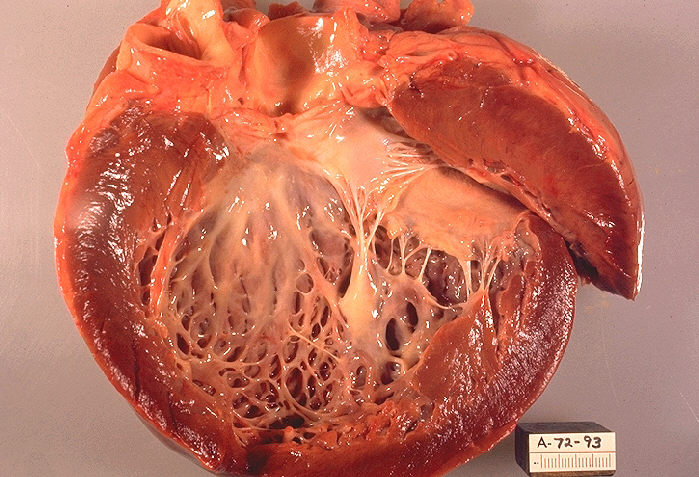
Opened left ventricle at autopsy in idiopathic cardiomyopathy, showing a thickened, dilated wall and subendocardial fibrosis (whitened endocardium). Alcoholic cardiomyopathy has the same gross appearance; the cause is established clinically. Credit: CDC/Dr. Edwin P. Ewing, Jr., Public Health Image Library, via Wikimedia Commons. Public domain.

Recovery. Among 94 patients with alcoholic cardiomyopathy followed for a median of 59 months, 37% recovered left ventricular function, 15% died of cardiovascular causes, and 15% underwent transplantation. Transplant-free survival was better than in idiopathic dilated cardiomyopathy. Atrial fibrillation (OR 9.7), QRS duration over 120 ms (OR 7.2), and absence of beta-blocker therapy (OR 4.4) predicted death or transplantation. Patients who reduced intake to moderate levels had survival and recovery similar to those who abstained (Guzzo-Merello 2015). Abstinence is the treatment goal, combined with guideline-directed medical therapy, and the evaluation for a reversible cause of heart failure with reduced ejection fraction (HFrEF) applies as for any new cardiomyopathy. Because function often improves, a primary-prevention defibrillator decision follows at least 3 months of guideline-directed therapy and a period of abstinence.
Current recommendations on alcohol intake
The 2025 AHA statement advises people who do not drink not to start, and people who drink to limit intake to 2 or fewer drinks a day for men and 1 or fewer for women. It names groups who should not drink: people taking interacting medications; people with heart failure, uncontrolled hypertension, or liver disease; pregnant women and those trying to conceive; people under the legal drinking age; and anyone planning to drive (Piano 2025). Specific cardiovascular conditions carry lower targets.
| Source | Recommendation |
|---|---|
| AHA scientific statement, 2025 | Do not start drinking for cardiovascular protection; if drinking, 2 or fewer drinks a day for men and 1 or fewer for women; whether drinking is part of a healthy lifestyle is unknown |
| Dietary Guidelines for Americans, 2025–2030 | Consume less alcohol for better overall health; the numeric limits of earlier editions (2 or fewer drinks a day for men, 1 or fewer for women) were removed; complete avoidance of alcohol in pregnancy, in recovery from alcohol use disorder, with inability to control intake, and with medications or medical conditions that interact with alcohol |
| 2025 AHA/ACC hypertension guideline | Avoid alcohol or limit to 1 standard drink a day for women and 2 for men |
| 2023 chronic coronary disease guideline | Limit to 1 drink a day for women and 2 for men (Class 2a); no alcohol for cardiovascular protection (Class 3: No Benefit) |
| 2023 ACC/AHA/ACCP/HRS atrial fibrillation guideline | Minimize or eliminate alcohol in patients seeking rhythm control (Class 1) |
| 2024 ESC atrial fibrillation guideline | 3 or fewer standard drinks (30 g or less) a week (Class I) |
| 2022 AHA/ACC/HFSA heart failure guideline | Abstinence in alcoholic cardiomyopathy; alcohol is among the toxic causes of HFrEF evaluated in all new cardiomyopathies |
| Canada's Guidance on Alcohol and Health, 2023 | 2 or fewer standard drinks a week low risk; 3 to 6 moderate risk; 7 or more increasingly high risk, including of heart disease and stroke |
Alcohol recommendations from US and international sources relevant to cardiovascular care (Piano 2025; Jones 2025; Virani 2023; Joglar 2023; Van Gelder 2024; Heidenreich 2022; Paradis 2023).
Treatment of alcohol use disorder in patients with heart disease
Moderate or severe alcohol use disorder is a chronic medical condition with effective treatment. Medication combined with behavioral treatment and mutual-help groups reduces heavy drinking days and relapse. The American Psychiatric Association recommends naltrexone or acamprosate for moderate to severe alcohol use disorder, with disulfiram, topiramate, and gabapentin for patients who do not respond to or cannot take the first-line drugs (Reus 2018). Choice in a cardiac patient depends on kidney and liver function, opioid use, and the cardiac diagnosis.
| Medication | Mechanism and usual adult dose | Cardiac considerations | Other limitations |
|---|---|---|---|
| Naltrexone | Mu-opioid antagonist; 50 mg orally once daily or 380 mg intramuscularly at 4-week intervals | No direct cardiovascular toxicity | Contraindicated with current opioid use or opioid agonist treatment (precipitated withdrawal, loss of analgesia); avoided in decompensated liver disease |
| Acamprosate | Glutamate modulation; 666 mg three times daily; 333 mg three times daily for creatinine clearance 30–50 mL/min | No direct cardiovascular toxicity; preferred with liver disease | Contraindicated with creatinine clearance 30 mL/min or less; three-times-daily dosing |
| Disulfiram | Aldehyde dehydrogenase inhibitor; produces the disulfiram-alcohol reaction | Contraindicated in severe myocardial disease or coronary occlusion; the reaction can cause hypotension, arrhythmia, myocardial infarction, and heart failure | Effective mainly with supervised dosing; hepatotoxicity |
| Topiramate (off-label) | GABA and glutamate effects | No direct cardiovascular toxicity | Cognitive effects, paresthesia, kidney stones, metabolic acidosis |
| Gabapentin (off-label) | Calcium channel alpha-2-delta ligand | Can cause edema; dizziness raises fall risk with anticoagulation | Renal dose adjustment; misuse with opioids |
| Baclofen (off-label) | GABA-B agonist | No direct cardiovascular toxicity | Used in alcohol-associated liver disease; sedation; renal dose adjustment |
Pharmacotherapy for alcohol use disorder in cardiac patients. Acamprosate and disulfiram details are from the US prescribing information; first-line and second-line positions are from the American Psychiatric Association guideline (Reus 2018). GABA, gamma-aminobutyric acid.
Glucagon-like peptide-1 receptor agonists reduced alcohol self-administration and craving in a small phase 2 trial; alcohol use disorder is not an approved indication, as described in neuropsychiatric effects of GLP-1 receptor agonists. Cardiac rehabilitation, heart failure clinics, and atrial fibrillation clinics are settings where alcohol counseling can be repeated at all visits and linked to measurable results such as blood pressure, atrial fibrillation burden, and ejection fraction.
Alcohol withdrawal, thiamine deficiency, and the hospitalized cardiac patient
Cardiovascular effects of withdrawal. Withdrawal begins within hours of the last drink in a person with physiologic dependence. Sympathetic overactivity produces tachycardia, hypertension, tremor, sweating, and anxiety, and it can precipitate atrial fibrillation, demand ischemia, stress cardiomyopathy, and, with hypokalemia and hypomagnesemia, ventricular arrhythmia. Seizures and delirium tremens are the most dangerous complications. Unrecognized withdrawal is a common cause of unexplained tachycardia, hypertension, and agitation after cardiac admission or surgery.
Management. The American Society of Addiction Medicine (ASAM) guideline recommends benzodiazepines as first-line treatment of alcohol withdrawal, dosed by symptom-triggered or front-loaded protocols guided by a validated scale such as the Clinical Institute Withdrawal Assessment for Alcohol, revised (CIWA-Ar). Phenobarbital is an alternative in experienced settings. Beta-blockers and clonidine control heart rate and blood pressure as adjuncts. They do not prevent seizures or delirium and can mask the signs used to dose benzodiazepines, so they are not used alone (ASAM alcohol withdrawal guideline 2020). Potassium, magnesium, and phosphate are replaced. Patients with withdrawal and acute coronary syndrome or decompensated heart failure are monitored on telemetry.
Thiamine deficiency and wet beriberi. Alcohol use disorder with poor nutrition causes thiamine deficiency, which impairs aerobic metabolism, causes lactic acidosis, and dilates peripheral vessels. The result is high-output heart failure with warm extremities, edema, and tachycardia, and in its fulminant form (Shoshin beriberi) shock with severe lactic acidosis. Intravenous thiamine is given before glucose to patients at risk, and response within hours to days supports the diagnosis. Dosing and the differential diagnosis of high-output failure are in causes of high-output heart failure.
Alcohol interactions with cardiovascular drugs
Chronic heavy drinking induces hepatic enzymes and can lower the international normalized ratio (INR) on warfarin, whereas binge drinking, malnutrition, and alcohol-related liver disease raise it and increase bleeding. Consistency of intake matters more than abstinence for INR stability, as described in alcohol and warfarin. Alcohol adds to the hypotensive effect of nitrates, alpha-blockers, phosphodiesterase-5 inhibitors, and other vasodilators, and to the sedative effects of centrally acting drugs (interactions with food, alcohol, and tobacco). Heavy drinking with liver disease reduces clearance of drugs with high hepatic extraction and contributes to thrombocytopenia and coagulopathy that increase bleeding with antiplatelet drugs and direct oral anticoagulants. Metronidazole and some cephalosporins cause disulfiram-like reactions.
Cocaine: acute toxicity, chronic effects, and adulterants
Acute toxicity. Cocaine blocks reuptake of norepinephrine, dopamine, and serotonin, blocks sodium and potassium channels, constricts coronary arteries through alpha-adrenergic stimulation, and activates platelets, as described in cocaine pharmacology and mechanisms of ischemia. Chest pain after cocaine is evaluated with serial electrocardiograms and troponin, with early repolarization a frequent mimic, and low-risk patients are discharged after 9 to 12 hours of observation (evaluation of cocaine-associated chest pain). Benzodiazepines are first-line, followed by nitroglycerin, phentolamine, and calcium channel blockers, with aspirin for suspected acute coronary syndrome and cooling for hyperthermia (treatment of cocaine toxicity). Beta-blockers are not given to patients with acute coronary syndrome and signs of acute cocaine or methamphetamine intoxication (euphoria, tachycardia, or hypertension) (Class 3: Harm in the 2014 AHA/ACC non–ST-elevation acute coronary syndrome guideline). A combined alpha- and beta-blocker such as labetalol may be considered for hypertension or tachycardia after a vasodilator has been given (Amsterdam 2014; McCord 2008). The evidence behind this restriction is in beta-blockers after cocaine, and stent and dual antiplatelet choices are in stimulant-associated chest pain and acute coronary syndrome. Myocardial infarction, aortic dissection, and arrhythmia after cocaine, including wide-complex tachycardia treated with hypertonic sodium bicarbonate, are described in cocaine-associated infarction, dissection, and arrhythmias.
Cocaine with alcohol. When cocaine and alcohol are taken together, the liver forms cocaethylene, which has a longer half-life than cocaine and intensifies sodium and potassium channel blockade. The combination is common and is recorded in the history.
Chronic use. Chronic cocaine use is associated with left ventricular hypertrophy, myocardial fibrosis, dilated cardiomyopathy, myocarditis with contraction band necrosis, coronary artery aneurysms, and accelerated coronary and carotid atherosclerosis with more coronary calcium, although several associations weaken after adjustment for tobacco (chronic cocaine and methamphetamine cardiomyopathy and atherosclerosis). In a prospective study of patients discharged after 9 to 12 hours in a chest pain observation unit, all 4 nonfatal myocardial infarctions within 30 days occurred in patients who continued to use cocaine (Weber 2003). Long-term care therefore combines standard secondary prevention (antiplatelet therapy, statin, blood pressure control, a beta-blocker when indicated once intoxication has resolved) with treatment of stimulant use disorder and tobacco cessation, described under treatment of stimulant use disorder.
Levamisole and other adulterants. Levamisole, a veterinary anthelmintic, is a common cocaine adulterant. It causes agranulocytosis, retiform purpura with skin necrosis of the ears and extremities, and an antineutrophil cytoplasmic antibody-associated vasculitis that can involve the kidneys and lungs. The combination of cocaine-related vasculitis and endocarditis-like embolic lesions creates a difficult differential diagnosis in a febrile patient. Cocaine and methamphetamine are often contaminated with fentanyl, so people who use stimulants without opioid tolerance are at risk of opioid overdose, and naloxone is offered to them as to people who use opioids.
Methamphetamine: epidemiology and the cardiovascular burden
Methamphetamine is smoked, injected, snorted, or swallowed. It reverses monoamine transporters and releases norepinephrine, dopamine, and serotonin from nerve terminals and has a longer half-life than cocaine, producing a longer and more intense sympathetic state. Repeated binges over days expose the heart to sustained catecholamine excess, hypertension, and tachycardia. The drug and its metabolites generate oxidative stress in myocytes and endothelium.
Substance-related cardiovascular mortality rose steeply from 1999 to 2019 in people who used psychostimulants, mainly methamphetamine, or cannabis (Minhas 2024), and psychostimulants were involved in 28,722 overdose deaths in 2024 (Garnett 2026). Use is concentrated in the western United States, rural areas, men who have sex with men, people experiencing homelessness, and people with HIV, and a large share of people who use methamphetamine also use opioids or tobacco. After overdose and injury, cardiovascular disease is a leading cause of death in people who use methamphetamine. The cardiovascular conditions are heart failure, pulmonary arterial hypertension, acute coronary syndrome, stroke, aortic dissection, arrhythmia and, with injection, endocarditis.
Methamphetamine-associated cardiomyopathy and recovery with abstinence
Clinical features. A systematic review of 21 observational studies found that methamphetamine-associated heart failure rose in prevalence across the study periods, affected diverse groups with a male predominance, and had preserved ejection fraction in up to 44% of patients. Symptoms were worse than in heart failure from other causes. Female sex, abstinence, and guideline-directed therapy were associated with improved outcomes, and chamber dimensions on echocardiography and fibrosis on biopsy predicted the extent of recovery after abstinence (Manja 2023). Among 203,005 first heart failure hospitalizations in the Veterans Affairs system, 4,080 were associated with methamphetamine. Median ejection fraction was 30%, compared with 40% in other heart failure, and 18% had an ejection fraction of 50% or more. Discharge against medical advice was four times as common (8% vs 2%), and only 18% engaged in methamphetamine treatment within 30 days of discharge (Manja 2024).
Phenotype and evaluation. Patients are usually young (in the fourth decade), with severe left ventricular dilatation and dysfunction, frequent left ventricular thrombus, and often raised pulmonary pressures. In 30 patients in Germany with ejection fraction below 40% and endomyocardial biopsy, mean age was 30 years, 93% were men, mean left ventricular end-diastolic diameter was 67 mm, mean ejection fraction 19%, and one-third had intraventricular thrombi. Biopsy showed inflammation and fibrosis, and fibrosis correlated with the duration of use (Schürer 2017). The evaluation is that of any new HFrEF and its reversible causes, with toxicology, echocardiography for thrombus, and cardiac magnetic resonance for fibrosis. Patients with methamphetamine use and preserved ejection fraction can have abnormal global longitudinal strain that improves with cessation (Bhatia 2022).
Recovery with abstinence. In the German series, patients who stopped methamphetamine and received medical therapy improved ejection fraction from 19% to 43%, whereas those who continued did not improve; the composite of death, nonfatal stroke, and heart failure rehospitalization occurred in 57.1% with continued use and 13.0% after cessation. Improvement was independently associated with less fibrosis on biopsy (Schürer 2017). Guideline-directed therapy for HFrEF is started in all patients (Heidenreich 2022). Evidence-based beta-blockers are used in methamphetamine cardiomyopathy as in other HFrEF and are started once the patient is no longer acutely intoxicated. Anticoagulation for left ventricular thrombus is weighed against adherence and bleeding risk. A primary-prevention defibrillator decision follows a period of abstinence and at least 3 months of guideline-directed therapy, because recovery is common; a wearable defibrillator may bridge selected high-risk patients. Advanced therapies are considered on the same terms as for other patients once sustained remission is documented.
Methamphetamine-associated pulmonary arterial hypertension
Methamphetamines are a definite drug-associated cause of pulmonary arterial hypertension (group 1), as listed under causes and associated forms of pulmonary arterial hypertension; cocaine and other amphetamines are possible associations. In a prospective cohort of 90 patients with methamphetamine-associated disease and 97 with idiopathic disease, patients with methamphetamine-associated disease had higher right atrial pressure and lower stroke volume index. Event-free survival was 64.2%, 47.2%, and 25% at 2.5, 5, and 10 years, and the risk of clinical worsening or death was more than twice that of idiopathic disease (HR 2.04). Hospitalized people who used methamphetamine in California had a 2.6-fold higher risk of a pulmonary arterial hypertension diagnosis (Zamanian 2018). Unexplained dyspnea, right ventricular dilatation, or a raised tricuspid regurgitant velocity in a person who uses methamphetamine prompts evaluation for pulmonary hypertension with right heart catheterization. Left ventricular dysfunction from methamphetamine can coexist, so pulmonary arterial wedge pressure separates pre-capillary from post-capillary disease. Treatment follows standard pulmonary arterial hypertension therapy, with treatment of methamphetamine use disorder. Oral therapies are started regardless of whether abstinence has been achieved, and parenteral prostacyclin requires a central line that adds infection risk in people who inject drugs.
Stimulant-associated acute coronary syndrome, stroke, aortic dissection, and hypertensive emergency
Acute coronary syndrome. Methamphetamine produces vasospasm, thrombosis, and demand ischemia like cocaine, and patients with methamphetamine-associated chest pain and acute coronary syndrome are managed in the same way, including the restriction on beta-blockers during intoxication (stimulant-associated chest pain and acute coronary syndrome). Myocardial infarction with nonobstructive coronary arteries, coronary dissection, and stress cardiomyopathy are recognized presentations after stimulant use.
Stroke. Stimulants cause hemorrhagic stroke through acute hypertension and rupture of aneurysms or vascular malformations, and ischemic stroke through vasospasm, vasculitis-like changes, cardioembolism from cardiomyopathy or atrial fibrillation, and accelerated atherosclerosis. Stroke in a young adult prompts toxicology.
Aortic dissection. Cocaine use was documented in 1.8% of patients in the International Registry of Acute Aortic Dissection, mostly in US sites, with a higher share of type B dissection and younger age than other patients (aortic dissection after cocaine); stimulants appear among the risk factors for acute aortic syndrome. Dissection is excluded before antithrombotic therapy in a person with chest or back pain after stimulant use.
Hypertensive emergency. Sympathomimetic hypertensive emergency is treated first with benzodiazepines and then with phentolamine, a dihydropyridine calcium channel blocker, or nitroglycerin, with evaluation for hyperthermia, rhabdomyolysis, dissection, intracranial hemorrhage, and infarction (sympathomimetic hypertensive emergency).
Takotsubo syndrome and myocarditis. Catecholamine excess from cocaine, methamphetamine, and other stimulants can trigger stress (takotsubo) cardiomyopathy, and cocaine causes myocarditis with contraction band necrosis; both are distinguished from infarction by angiography and cardiac magnetic resonance.
Treatment of stimulant use disorder in cardiac patients
No medication is approved by the US Food and Drug Administration (FDA) for cocaine or methamphetamine use disorder. Contingency management, which provides escalating incentives for drug-negative urine tests, has the strongest evidence of any treatment for stimulant use disorder and has been delivered in combined addiction and cardiology clinics for patients with stimulant-associated cardiomyopathy. Cognitive behavioral therapy and community reinforcement approaches are added. In a double-blind trial of 403 adults with moderate or severe methamphetamine use disorder, extended-release injectable naltrexone (380 mg at 3-week intervals) with oral extended-release bupropion (450 mg a day) produced a weighted response rate (at least three of four urine samples negative) of 13.6% compared with 2.5% with placebo (Trivedi 2021). Bupropion lowers the seizure threshold and can raise blood pressure, and naltrexone precludes opioid analgesia. Treatment of tobacco use, depression, psychosis, housing instability, and coexisting opioid use disorder is part of the plan.
In the cardiology clinic, the elements that make abstinence more likely are the same as in other chronic disease: a consistent team, scheduled follow-up after discharge, attention to the patient's own goals, and direct referral (a warm handoff) to addiction treatment. Relapse is expected in a chronic relapsing disorder and is met with renewed treatment and continued cardiac care. Ejection fraction and pulmonary pressure measured on serial echocardiograms give the patient concrete evidence of recovery with abstinence.
Prescription stimulants for attention-deficit/hyperactivity disorder
Amphetamine salts, lisdexamfetamine, and methylphenidate raise blood pressure by a few millimeters of mercury and heart rate by a few beats per minute. Large cohort studies in children and adults found no increase in myocardial infarction, sudden death, or stroke with current use, as summarized in prescription stimulants. Longer exposure carries a measurable risk. A Swedish nested case-control study included 278,027 people with attention-deficit/hyperactivity disorder aged 6 to 64 years. The risk of cardiovascular disease rose by 4% per year of medication use (adjusted OR 1.04), with the largest increase in the first 3 years. Use for more than 3 years was associated with hypertension (adjusted OR 1.72 for 3 to 5 years and 1.80 for more than 5 years) and arterial disease (adjusted OR 1.65 for 3 to 5 years) (Zhang 2024). Blood pressure and heart rate are measured before treatment and during follow-up, and nonstimulant alternatives (atomoxetine, viloxazine, alpha-2 agonists) are considered in patients with uncontrolled hypertension, symptomatic arrhythmia, or structural heart disease. Nonmedical use of prescription stimulants at high doses or by injection produces the same toxicity as illicit amphetamines.
MDMA, synthetic cathinones, and novel stimulants
3,4-Methylenedioxymethamphetamine (MDMA, "ecstasy" or "molly") releases serotonin, norepinephrine, and dopamine. Cardiovascular toxicity includes tachycardia, hypertension, arrhythmia and, in crowded hot settings with exertion, hyperthermia with rhabdomyolysis, disseminated intravascular coagulation, and multiorgan failure. MDMA causes antidiuretic hormone release, and combined with heavy water intake it produces severe hyponatremia with cerebral edema. Serotonin syndrome occurs with other serotonergic drugs. MDMA and its metabolites are 5-HT2B receptor agonists like the fenfluramines. Among 29 people who used MDMA, 28% met FDA echocardiographic criteria for drug-induced valvular heart disease compared with none of 29 matched controls, with more mitral and tricuspid regurgitation (Droogmans 2007).
Synthetic cathinones ("bath salts," mephedrone, alpha-PVP) and other novel psychoactive stimulants produce a sympathomimetic syndrome similar to methamphetamine, often with severe agitation, hyperthermia, and prolonged effects; they are not detected by standard immunoassays. Management follows that of other sympathomimetic toxicity: benzodiazepines, cooling, and vasodilators.
Caffeine and energy drinks
The FDA cites 400 mg of caffeine a day as an amount not generally associated with adverse effects in healthy adults. Habitual coffee intake is not associated with more atrial fibrillation. The 2023 atrial fibrillation guideline states that recommending caffeine abstention to prevent atrial fibrillation is of no benefit (Class 3: No Benefit), although abstention may reduce symptoms in patients who identify caffeine as a trigger (Joglar 2023). Energy drinks combine high caffeine doses with taurine and other stimulants and are often consumed rapidly, with alcohol or during exertion. In a randomized crossover study of 24 patients with congenital long QT syndrome, an energy drink raised systolic and diastolic pressure; mean QTc did not change significantly, although 3 patients had QTc prolongation of 50 ms or more (Gray 2017). Pre-workout powders and supplements can contain undeclared stimulants, as described in stimulants, caffeine and supplements in athletes.
Cannabis: pharmacology, acute hemodynamic effects, and the 2020 AHA statement
Tetrahydrocannabinol (THC) activates CB1 receptors in the brain, autonomic nervous system, myocardium, and vasculature. Acute use raises heart rate by sympathetic activation and increases myocardial oxygen demand; orthostatic hypotension can follow, and at high doses vagal effects produce bradycardia. Smoked cannabis also delivers carbon monoxide and combustion particulates similar to tobacco smoke. Cannabidiol (CBD) is not intoxicating and has few direct hemodynamic effects at usual doses but inhibits hepatic enzymes. THC concentrations in concentrates, vaped oils, and modern plant material far exceed those in the cannabis studied in older cohorts, so older exposure-outcome data may underestimate risk.
The 2020 AHA scientific statement reviewed medical and recreational cannabis. It concluded that few of the possible therapeutic benefits of cannabis are cardiovascular, whereas many of its concerning health effects are cardiovascular, with risk influenced by the mechanism of delivery (Page 2020). The statement advises against smoking or vaping cannabis, describes its cardiovascular hazards (tachycardia, myocardial infarction, arrhythmia including atrial fibrillation, and stroke), and recommends that clinicians screen for cannabis use and counsel patients with cardiovascular disease. Its main evidence limitations are dependence on observational data, confounding by tobacco, and imprecise measurement of dose.
Cannabis and myocardial infarction, arrhythmia, and stroke
Myocardial infarction and acute coronary syndrome. Case-crossover studies summarized in the AHA statement show a higher risk of myocardial infarction in the hour after smoking cannabis (Page 2020), and myocardial infarction in young adults who use cannabis often occurs with nonobstructive coronary arteries or thrombus without extensive atherosclerosis. In a cross-sectional analysis of 434,104 adults in the Behavioral Risk Factor Surveillance System, daily cannabis use was associated with myocardial infarction (adjusted OR 1.25), stroke (adjusted OR 1.42), and a composite of coronary heart disease, infarction, and stroke (adjusted OR 1.28). The associations showed a dose-response by days of use per month. Among people who had never smoked tobacco, daily cannabis use was associated with myocardial infarction (adjusted OR 1.49) and stroke (adjusted OR 2.16) (Jeffers 2024). The design cannot establish timing or causation, but the association in never-smokers argues against confounding by tobacco alone.
Arrhythmia. Cannabis use is associated with atrial fibrillation, sinus tachycardia, supraventricular tachycardia, and, less often, ventricular arrhythmia and Brugada-pattern changes in case reports. Atrial fibrillation after cannabis use in a young person resolves in most cases, and recurrent episodes prompt counseling as with alcohol.
Stroke and cannabis arteritis. Cannabis is associated with ischemic stroke in young adults, often through reversible cerebral vasoconstriction syndrome, a multifocal intracranial stenosis that improves with abstinence. Cannabis arteritis is a rare peripheral arteriopathy in young men who smoke cannabis, usually with tobacco, that resembles thromboangiitis obliterans and causes digital ischemia.
Route of cannabis use, cannabidiol interactions, synthetic cannabinoids, and procedures
Route. Smoking delivers THC within minutes along with combustion products. Vaping avoids combustion but can deliver high THC concentrations and additives, as in the outbreak of e-cigarette or vaping product use-associated lung injury linked to vitamin E acetate. Edibles have a delayed onset and prolonged effect, which leads to repeated dosing and accidental intoxication. The AHA statement favors nonsmoked, nonvaped routes when cannabis is used medically (Page 2020).
Interactions. THC and CBD are metabolized by CYP3A4 and CYP2C9, and CBD inhibits CYP2C19, CYP2C9, and CYP3A4. Raised INR on warfarin is reported after cannabis or CBD use, and interactions are expected with clopidogrel activation, some statins, calcium channel blockers, antiarrhythmic drugs, and calcineurin inhibitors. Cannabis use is recorded before warfarin is started or dosed.
Synthetic cannabinoids. Products sold as "K2" or "Spice" contain full CB1 agonists far more potent than THC, with unpredictable composition. Cardiovascular toxicity includes severe tachycardia and hypertension, myocardial infarction in young adults, stroke, QT prolongation, ventricular arrhythmia, seizures, and acute kidney injury; contamination with brodifacoum caused outbreaks of severe coagulopathy and bleeding. Synthetic cannabinoids are not detected by standard cannabinoid immunoassays. Management is supportive, with benzodiazepines for agitation.
Procedures and transplantation. Cannabis use is recorded before procedures because acute intoxication raises heart rate and blood pressure and because chronic use alters sedation and analgesic requirements. Before heart transplant listing, abstinence from cannabis is reasonable (Class 2a), as described under transplant candidacy.
Cardiovascular effects of opioids
Opioids act on mu, kappa, and delta receptors in the brain stem, autonomic nervous system, and heart. Therapeutic and illicit doses produce bradycardia through vagal activation and hypotension through venodilation and, with morphine, histamine release. The main cardiovascular danger is respiratory depression: hypoxemia and hypercapnia lead to bradycardia, pulseless electrical activity, or asystole. Fentanyl and its analogs act within minutes and can cause chest wall rigidity that impairs ventilation. Chronic opioid therapy causes central sleep apnea with ataxic breathing, described in opioid-induced central sleep apnea. Opioid withdrawal, including withdrawal precipitated by naloxone or naltrexone, produces a catecholamine surge with tachycardia, hypertension, and, rarely, pulmonary edema, myocardial ischemia, or stress cardiomyopathy. Injection adds endocarditis, septic emboli, and vascular injury.
Patients with chronic pain and coronary disease or heart failure often receive long-term opioids. Opioids combined with benzodiazepines, gabapentinoids, or alcohol raise the risk of fatal respiratory depression, and naloxone is prescribed to patients receiving high-dose opioids or these combinations. Nonmedical use of benzodiazepines, gabapentin, or pregabalin causes sedation, hypoventilation, and hypoxemia, and the risk is greatest when they are combined with opioids. In 2016 the FDA required a boxed warning on opioid and benzodiazepine labels for slowed or difficult breathing and death with combined use. In 2017 it advised that buprenorphine and methadone not be withheld from patients taking benzodiazepines. In 2019 the FDA warned that gabapentin and pregabalin can cause serious breathing difficulties in patients who take opioids or other central nervous system depressants, have chronic obstructive pulmonary disease, or are older adults (FDA 2019b).
Methadone, loperamide, and QT prolongation
Methadone. Methadone blocks the hERG potassium channel in a dose-related manner, and its US label carries a boxed warning for life-threatening QT prolongation. Among 154 patients with opioid use disorder analyzed in a randomized trial, 23% receiving methadone and 0% receiving buprenorphine developed a QTc above 470 ms (men) or 490 ms (women), and QTc continued to rise over time on fixed methadone doses (Wedam 2007). An independent expert panel recommended that clinicians inform patients of the arrhythmia risk and ask about structural heart disease, arrhythmia, and syncope. It recommended an electrocardiogram before treatment, within 30 days, and annually, and also when the dose exceeds 100 mg a day or with unexplained syncope or seizures. With QTc between 450 and 500 ms, it advised discussion of risks and more frequent monitoring; with QTc above 500 ms, it advised considering dose reduction, removal of contributing factors, or an alternative treatment (Krantz 2009). Methadone levels rise with CYP3A4 and CYP2B6 inhibitors and fall with inducers (rifampin, several antiretroviral drugs), which can precipitate withdrawal. The decision to reduce or stop methadone weighs torsades risk against the high mortality of untreated opioid use disorder; switching to buprenorphine is often the safer option. QT management, CredibleMeds categories, and drug combinations are in QT-prolonging drugs.
Loperamide. Loperamide is a peripherally acting mu-opioid agonist that normally does not reach the brain. At doses many times the label maximum (8 mg a day over the counter, 16 mg a day by prescription), loperamide blocks sodium and potassium channels. Such doses are taken to treat opioid withdrawal or for euphoria, often with drugs that inhibit its metabolism or P-glycoprotein efflux. The result is QRS widening, QT prolongation, torsades de pointes, ventricular tachycardia, syncope, and death. The FDA warned of serious heart problems with high doses in 2016, and in 2019 it approved packaging of brand-name over-the-counter loperamide in unit-dose blister packs of no more than 48 mg a carton (FDA 2016a; FDA 2019a). Unexplained wide-QRS or long-QT arrhythmia in a person with opioid use disorder prompts a specific question about loperamide; standard toxicology does not detect it. Treatment includes magnesium, correction of potassium, overdrive pacing or isoproterenol for torsades, sodium bicarbonate for QRS widening, and treatment of the opioid use disorder.
Medications for opioid use disorder in cardiac patients
Medications for opioid use disorder reduce overdose and all-cause mortality. Among 17,568 adults who survived an opioid overdose in Massachusetts, methadone (adjusted HR 0.47) and buprenorphine (adjusted HR 0.63) were associated with lower all-cause mortality, whereas naltrexone showed no association (Larochelle 2018). These drugs are started during hospitalization for endocarditis, overdose, or other cardiac illness and continued through procedures. ASAM recommends that medication for opioid use disorder be offered without requiring psychosocial treatment as a precondition (ASAM opioid use disorder guideline 2020).
| Medication | Pharmacology | Cardiac considerations | Access in the United States |
|---|---|---|---|
| Methadone | Full mu agonist; long, variable half-life | Dose-related QT prolongation and torsades; ECG before treatment, within 30 days, annually, and above 100 mg/day; many drug interactions | For opioid use disorder, dispensed only by certified opioid treatment programs; hospital teams can continue or start it during admission |
| Buprenorphine (sublingual, buccal film, extended-release injection) | High-affinity partial mu agonist; ceiling on respiratory depression | Little QT prolongation at doses used for opioid use disorder; preferred when QTc is prolonged on methadone | Prescribed by any clinician with a controlled-substance registration; no special waiver |
| Extended-release naltrexone | Mu antagonist, monthly injection | No direct cardiac effects; blocks opioid analgesia; requires 7 to 10 days without opioids before starting | Any prescriber |
| Naloxone (rescue) | Short-acting mu antagonist | Precipitated withdrawal with catecholamine surge; shorter duration than fentanyl and methadone | Nasal spray available without prescription |
Medications for opioid use disorder and rescue naloxone in cardiac care (Wedam 2007; Krantz 2009; ASAM opioid use disorder guideline 2020). ECG, electrocardiogram.
Perioperative and acute pain. Buprenorphine and methadone are generally continued through cardiac surgery and procedures, with additional short-acting opioids and multimodal analgesia for acute pain, because stopping them risks relapse and overdose after discharge. The inpatient team coordinates with the opioid treatment program to confirm methadone doses and arrange continuation.
Opioid overdose, cardiac arrest, and naloxone
Opioid overdose causes hypoxic cardiac arrest, usually with pulseless electrical activity or asystole. The priority is ventilation. Naloxone is given for respiratory arrest with a pulse (Class 1) and may be given in cardiac arrest when it does not interrupt cardiopulmonary resuscitation (Class 2b), as described in poisoning and toxin-related cardiac arrest (Lavonas 2023; Cao 2025). Naloxone acts for a shorter time than fentanyl analogs, methadone, and extended-release opioids, so patients are observed for recurrent respiratory depression. Large doses can precipitate severe withdrawal, agitation, and, rarely, pulmonary edema or arrhythmia.
After resuscitation, survivors may have hypoxic-ischemic brain injury, aspiration pneumonia, rhabdomyolysis, acute kidney injury, and myocardial stunning with reversible global dysfunction. Post-arrest care follows standard post-cardiac arrest care, with toxicology and an electrocardiogram for QT prolongation. Before discharge, the patient receives naloxone, is offered buprenorphine or methadone, and is linked to addiction treatment, because the year after a nonfatal overdose carries a high risk of death (Larochelle 2018).
Fentanyl, xylazine, and medetomidine in the drug supply
Illicitly manufactured fentanyl and its analogs dominate the US opioid supply and contaminate stimulants and counterfeit pills. Fentanyl is not detected by standard opiate immunoassays. Its potency and rapid onset leave little time between use and apnea, and multiple naloxone doses may be needed.
Xylazine, a veterinary alpha-2 adrenergic agonist, was designated by the White House Office of National Drug Control Policy in 2023 as an emerging threat when combined with fentanyl. It causes sedation, bradycardia, hypotension, and hyperglycemia. Repeated use causes severe necrotic wounds at and away from injection sites. Naloxone does not reverse xylazine. It is still given in suspected overdose because fentanyl is almost always present, and ventilation is supported. Medetomidine, a more potent alpha-2 agonist, has displaced xylazine in some cities. In Philadelphia, a withdrawal syndrome among fentanyl-exposed patients included severe hypertension and tachycardia that were resistant to treatments used for fentanyl and xylazine withdrawal and responded to dexmedetomidine (Huo 2025). Cardiologists encounter these syndromes as bradycardia and hypotension during intoxication and as hypertensive, tachycardic withdrawal during hospitalization. Neither agent appears on standard toxicology panels.
Injection drug use: endocarditis and vascular complications
Injection of opioids, methamphetamine, or cocaine introduces skin and oral bacteria and fungi into the bloodstream. Endocarditis in people who inject drugs is most often caused by Staphylococcus aureus and involves the tricuspid valve, with septic pulmonary emboli, but left-sided and polymicrobial disease also occur and carry higher mortality. The AHA statement places addiction medicine consultation, medication for opioid use disorder, and harm-reduction services at the center of endocarditis care. It states that surgery is decided on the usual cardiac indications and is not withheld because of drug use (Baddour 2022). Diagnosis, surgery, and antibiotic strategy are in endocarditis in people who inject drugs, and the rising incidence linked to the opioid epidemic is in the epidemiology of endocarditis.
Vascular complications. Injection into the femoral or neck veins causes deep vein thrombosis, septic thrombophlebitis, and pseudoaneurysm. Inadvertent intra-arterial injection, particularly of crushed tablets, causes intense pain, distal embolization of particles, vasospasm, limb or digital ischemia, compartment syndrome, and gangrene. Infected (mycotic) pseudoaneurysms of the femoral artery present as a pulsatile groin mass with fever and can rupture. Duplex ultrasound and CT angiography define them before surgery, and percutaneous access through an infected groin is avoided. Mycotic aneurysms elsewhere follow endocarditis. Talc and other insoluble fillers injected intravenously lodge in the pulmonary capillaries and can cause foreign-body granulomatosis and pulmonary hypertension. Acute limb ischemia follows the standard approach in acute limb ischemia, with attention to infection and the nature of the injected material.
Anabolic-androgenic steroids
Anabolic-androgenic steroids are used without prescription by recreational weightlifters and bodybuilders far more than by competitive athletes. They are typically taken in cycles of several injectable and oral agents at doses many times physiologic replacement, often with growth hormone, insulin, thyroid hormone, diuretics, or stimulants. Among 140 experienced male weightlifters aged 34 to 54 years, the 86 men with at least 2 years of cumulative use had lower left ventricular ejection fraction (52% vs 63%) and lower early diastolic relaxation velocity than the 54 men who had not used steroids. Values were lowest in men using steroids at the time of study (ejection fraction 49%). Men who had used steroids had more coronary plaque volume, and plaque volume rose with cumulative lifetime use (Baggish 2017). Other effects include hypertension, a marked fall in HDL cholesterol and rise in low-density lipoprotein cholesterol (most pronounced with oral 17-alpha-alkylated agents), erythrocytosis, thrombosis, left ventricular hypertrophy with fibrosis, atrial fibrillation, ventricular arrhythmia, and sudden death.
Use is suspected in a muscular man with unexplained cardiomyopathy, early coronary disease, very low HDL cholesterol, a raised hematocrit, suppressed gonadotropins, or testicular atrophy. The history is taken without judgment, because disclosure is the only reliable route to diagnosis. Management is cessation; treatment of blood pressure, lipids, and erythrocytosis; standard therapy for heart failure or arrhythmia; and endocrinology referral for the hypogonadism that follows cessation, which drives relapse. Lipid abnormalities reverse within months of stopping, while ventricular dysfunction may only partly recover. In competitive sport, these agents fall under the rules on performance-enhancing drugs in athletes.
Inhalants and sudden sniffing death
Volatile hydrocarbons in solvents, fuels, glues, paint thinners, and aerosol propellants (toluene, butane, propane, halogenated hydrocarbons such as those in computer dusters) are inhaled by sniffing, huffing from a cloth, or bagging. They sensitize the myocardium to catecholamines. The classic description of sudden sniffing death reported young people who collapsed with presumed ventricular fibrillation during or shortly after inhalation, often when startled or exerting themselves (Bass 1970). Death can occur with a first use. Butane and propane also cause hypoxia, cold injury of the airway, and vagal arrest. Chronic toluene exposure causes cardiomyopathy, renal tubular acidosis with hypokalemia, and neurologic damage. Survivors of arrest are monitored for recurrent arrhythmia, and catecholamine-provoking stimuli are minimized. Resuscitation follows standard advanced life support, and beta-blockade has been used for recurrent arrhythmia in the sensitized period.
Nitrite inhalants. Amyl, butyl, and isobutyl nitrites ("poppers") are vasodilators used during sex. They cause hypotension, reflex tachycardia, headache, and methemoglobinemia, and with phosphodiesterase-5 inhibitors they can cause profound hypotension, the same interaction that contraindicates nitrates with these drugs.
Nitrous oxide. Nitrous oxide inhaled from chargers, canisters, or balloons can cause loss of consciousness and asphyxiation (FDA 2025b). It irreversibly inactivates vitamin B12-dependent methionine synthase, so heavy repeated use causes functional B12 deficiency with myeloneuropathy and hyperhomocysteinemia, often with a normal serum B12 level (Oussalah 2019; Stephan 2026). Deep vein thrombosis, pulmonary embolism, cerebral venous thrombosis, ischemic stroke, acute limb ischemia, myocardial infarction, and aortic thrombus are reported in young people who use nitrous oxide and have no conventional risk factors, and treatment combines anticoagulant or antiplatelet therapy, parenteral vitamin B12, and addiction care (Stephan 2026).
Hallucinogens, ketamine, and GHB
Classic hallucinogens. Lysergic acid diethylamide (LSD), psilocybin, mescaline, and dimethyltryptamine act mainly as serotonin 5-HT2A agonists. They raise heart rate and blood pressure modestly and transiently; serious cardiovascular events are uncommon and usually involve agitation, hyperthermia, co-ingestants, or preexisting heart disease. Several are 5-HT2B agonists, so the valvulopathy concern raised by other serotonergic drugs applies to frequent long-term microdosing, although clinical data are lacking. Psychedelic-assisted therapy trials have excluded patients with uncontrolled hypertension and significant cardiovascular disease.
Ketamine and esketamine. Ketamine is a dissociative anesthetic that increases sympathetic outflow and raises heart rate, blood pressure, and myocardial oxygen demand. The esketamine nasal spray label warns of blood pressure increases and requires blood pressure assessment before and after dosing with observation for at least 2 hours. The label contraindicates esketamine in aneurysmal vascular disease (including the thoracic and abdominal aorta and intracranial and peripheral arteries), arteriovenous malformation, and a history of intracerebral hemorrhage. Nonmedical ketamine use is associated with bladder injury and, with co-ingestants, cardiovascular stress.
Gamma-hydroxybutyrate (GHB). GHB and its precursors (gamma-butyrolactone, 1,4-butanediol) are central nervous system depressants that cause bradycardia, hypotension, respiratory depression, and coma with abrupt awakening. Withdrawal after frequent use resembles severe alcohol withdrawal with tachycardia, hypertension, and delirium, and it is treated with benzodiazepines.
Kratom and other emerging substances
Kratom, from the leaves of Mitragyna speciosa, is sold as a supplement and used for pain, energy, and self-treatment of opioid withdrawal. Its alkaloid mitragynine and the metabolite 7-hydroxymitragynine are mu-opioid agonists, with adrenergic effects at low doses. Reported cardiovascular effects include tachycardia, hypertension, QT prolongation (mitragynine blocks hERG in laboratory studies), arrhythmia, and cardiac arrest, usually with co-ingestants. Concentrated 7-hydroxymitragynine products contain far more of the opioid metabolite than natural leaf. The FDA states that no kratom drug product is approved, that kratom is not appropriate for use as a dietary supplement, and that kratom added to food is an unsafe food additive. It has warned consumers not to use kratom because of serious adverse events, including liver toxicity, seizures, and substance use disorder. In 2025 the FDA recommended that 7-hydroxymitragynine be scheduled under the Controlled Substances Act, citing its opioid-receptor binding and rising adverse events (FDA 2025a). The Drug Enforcement Administration placed mitragynine pseudoindoxyl and two related compounds, MGM-15 and MGM-16, in Schedule I by temporary order (91 FR 54948, 2026). It has proposed temporary Schedule I control of 7-hydroxymitragynine and mitragynine pseudoindoxyl above a specified threshold (91 FR 65370, 2026). Kratom use is recorded in patients with unexplained QT prolongation, opioid-type toxicity, or withdrawal. Its interactions with CYP3A4 and CYP2D6 substrates are considered.
Other emerging products relevant to cardiology include tianeptine (an antidepressant sold as a supplement with opioid-like effects and withdrawal), phenibut (a GABA-B agonist with sedation and severe withdrawal), nitazenes (synthetic opioids more potent than fentanyl), and dietary supplements adulterated with stimulants. Their effects follow their pharmacology: opioid-type agents cause respiratory depression and hypoxic arrest, and stimulants cause sympathomimetic toxicity.
Polysubstance use and tobacco co-exposure
Most people seen for substance-related cardiac disease use more than one substance. Cocaine with alcohol forms cocaethylene; stimulants with opioids ("speedballs") combine sympathetic stimulation with respiratory depression; fentanyl contamination exposes people who use stimulants to opioid overdose; alcohol with benzodiazepines or opioids deepens respiratory depression; and cannabis, stimulants, and alcohol are commonly used with tobacco. Polysubstance use complicates attribution: a young person with myocardial infarction who smokes tobacco and uses cocaine and cannabis has several overlapping exposures, and tobacco is the largest confounder in observational studies of cannabis and cocaine. Toxicology and a complete history are therefore obtained even when one substance is obvious.
Tobacco smoking is the most common co-exposure in people who use other substances, and treatment of tobacco dependence is part of all care plans for substance-related heart disease. Nicotine and tobacco products and their treatment are addressed in prevention guidelines and in lifestyle and risk-factor care for chronic coronary disease.
Cessation medicines and e-cigarettes. The 2018 ACC Expert Consensus Decision Pathway on tobacco cessation names combination nicotine replacement therapy and varenicline as first-line pharmacotherapy, given with counseling (Barua 2018). In EAGLES and its nontreatment extension, which followed 8,058 smokers for up to 52 weeks, major adverse cardiovascular events occurred in fewer than 0.5% of participants and did not differ among varenicline, bupropion, nicotine patch, and placebo (Benowitz 2018). In EVITA, varenicline started in the hospital after acute coronary syndrome raised biochemically confirmed abstinence at 24 weeks from 32.5% with placebo to 47.3%. Major adverse cardiovascular events occurred in 4.0% and 4.6% of patients (Eisenberg 2016). The 2023 AHA scientific statement on e-cigarettes reports acute increases in heart rate and blood pressure with nicotine-containing products and describes their long-term cardiovascular effects as unknown. It notes that e-cigarettes are not FDA-approved for cessation (Rose 2023).
Harm reduction and referral to addiction care
Harm reduction meets people where they are, reduces death and disease while use continues, and keeps them in contact with care. Its measures in cardiology are:
- Naloxone is prescribed or dispensed to anyone who uses opioids, takes high-dose opioid therapy, or uses stimulants that may contain fentanyl, and to their families.
- People who inject drugs are linked to syringe services programs for sterile equipment, wound care, and testing for HIV and hepatitis C, and they are taught not to inject alone and to avoid arterial and neck injection.
- Fentanyl and xylazine test strips identify contaminated supplies.
- Medication for opioid use disorder is started in hospital and continued after discharge with a scheduled appointment.
- People with alcohol use disorder receive pharmacotherapy and a reduction target when abstinence is not their goal.
- Contingency management and community treatment are offered for stimulant use disorder.
Referral. Addiction medicine consultation services in hospitals start medications, manage withdrawal, and arrange outpatient treatment. The Substance Abuse and Mental Health Services Administration (SAMHSA) maintains a national treatment locator (findtreatment.gov) and helpline (1-800-662-4357). Documentation of substance use in cardiac records is factual and non-stigmatizing, and positive toxicology is discussed with the patient while indicated cardiac care continues. A cardiology team that treats substance use as part of the cardiac diagnosis also creates the conditions under which patients disclose relapse early.
Substance use in heart transplant and left ventricular assist device candidacy
The International Society for Heart and Lung Transplantation (ISHLT) guideline recommends at least 6 months of abstinence before listing for illicit drug use, alcohol use disorder, and tobacco smoking (Class 1 for all three), confirmed by drug screens, phosphatidylethanol for alcohol, and cotinine for nicotine. Abstinence from cannabis before listing is reasonable (Class 2a), because inhaled cannabis raises the risk of fungal lung infection and cannabinoids interact with azoles, calcineurin inhibitors, warfarin, and statins (Peled 2024). These recommendations and the psychosocial evaluation are described in psychosocial evaluation and substance use. Patients with alcoholic or methamphetamine cardiomyopathy often recover during the abstinence period, which itself becomes part of the decision. For durable left ventricular assist devices (LVADs), the same psychosocial assessment applies, because active substance use is associated with nonadherence, driveline infection, pump thrombosis, and bleeding. The evaluation is described in psychosocial assessment for LVAD candidacy. Recipients who relapse after transplantation or implantation continue to receive treatment and care, and relapse prevention continues throughout follow-up.
Substance use in special populations: HIV, pregnancy, and older adults
People with HIV. Methamphetamine and cocaine use are more common among people with HIV than in the general population, and they add vasospasm, accelerated atherosclerosis, cardiomyopathy, and pulmonary arterial hypertension to the inflammatory and metabolic cardiovascular risk of HIV. Illicit drug use is a common precipitant of type 2 myocardial infarction in people with HIV. Efavirenz and ritonavir lower methadone concentrations and can precipitate withdrawal, as described in substance use in people with HIV.
Pregnancy. Cocaine and methamphetamine in pregnancy cause hypertensive crises, placental abruption, stroke, and myocardial infarction, and they are considered in the differential diagnosis of preeclampsia and peripartum cardiomyopathy. Pregnant women are advised to avoid alcohol completely (Dietary Guidelines 2025–2030). For opioid use disorder in pregnancy, methadone and buprenorphine are both recommended treatments, and withdrawal of opioid agonist treatment is avoided because relapse and overdose risk rise.
Older adults. Unhealthy alcohol use is underrecognized in older adults, who have higher blood alcohol for a given intake, more interacting drugs, and more falls; the single screening question uses the 4-drink threshold for adults older than 65 years. Cocaine and methamphetamine use in older adults with established coronary disease carries a higher absolute risk of infarction and arrhythmia, and cannabis use, including for medical indications, rises with age and adds orthostatic hypotension and drug interactions.
Errors in the cardiovascular care of people who use substances
- Treating light drinking as cardioprotective. Observational benefit is confounded by sick-quitter and healthy-drinker biases, genetic studies do not support protection, and the 2025 AHA statement advises against starting to drink for cardiovascular protection.
- Recording alcohol intake as "social" or "occasional" without quantifying standard drinks, binge frequency, and the AUDIT-C score.
- Applying the coronary J-curve to atrial fibrillation. Even 1 drink a day is associated with more atrial fibrillation, and abstinence reduced recurrence from 73% to 53% in the randomized trial.
- Withholding anticoagulation in atrial fibrillation because the patient drinks, without correcting the modifiable bleeding risk and treating the alcohol use disorder.
- Giving disulfiram to a patient with severe myocardial disease or coronary occlusion, or naltrexone to a patient receiving methadone or buprenorphine.
- Implanting a primary-prevention defibrillator in alcoholic or methamphetamine cardiomyopathy before a period of abstinence and at least 3 months of guideline-directed therapy, when recovery is common.
- Withholding a beta-blocker indefinitely after a cocaine-related event. The Class 3: Harm recommendation applies to acute intoxication; a beta-blocker indicated for HFrEF or after infarction is started once intoxication has resolved.
- Attributing new pulmonary hypertension in a person who uses methamphetamine to left heart disease without right heart catheterization.
- Assuming a negative opiate immunoassay excludes fentanyl, methadone, or buprenorphine, or that a negative panel excludes synthetic cannabinoids, cathinones, kratom, xylazine, or loperamide.
- Stopping methadone for a QTc of 500 ms without a plan for continued treatment of opioid use disorder, which exposes the patient to relapse and overdose.
- Missing loperamide as the cause of torsades de pointes or wide-QRS arrhythmia in a person with opioid use disorder.
- Discharging a survivor of opioid overdose or a patient with endocarditis from injection without naloxone, medication for opioid use disorder, and a referral.
- Using stigmatizing language ("abuser," "clean," "IVDU") in notes, which shapes how later clinicians make decisions about pain treatment and surgery.
References
- Piano MR, Marcus GM, Aycock DM, et al. Alcohol use and cardiovascular disease: a scientific statement from the American Heart Association. Circulation. 2025;152:e7–e21. doi:10.1161/CIR.0000000000001341
- Page RL 2nd, Allen LA, Kloner RA, et al. Medical marijuana, recreational cannabis, and cardiovascular health: a scientific statement from the American Heart Association. Circulation. 2020;142:e131–e152. doi:10.1161/CIR.0000000000000883
- Joglar JA, Chung MK, Armbruster AL, et al. 2023 ACC/AHA/ACCP/HRS guideline for the diagnosis and management of atrial fibrillation: a report of the American College of Cardiology/American Heart Association Joint Committee on Clinical Practice Guidelines. Circulation. 2024;149:e1–e156. Corrections: Circulation. 2024;149:e167, e936, e1413. doi:10.1161/CIR.0000000000001193
- Van Gelder IC, Rienstra M, Bunting KV, et al. 2024 ESC guidelines for the management of atrial fibrillation developed in collaboration with the European Association for Cardio-Thoracic Surgery (EACTS). Eur Heart J. 2024;45:3314–3414. doi:10.1093/eurheartj/ehae176
- Jones DW, Ferdinand KC, Taler SJ, et al. 2025 AHA/ACC/AANP/AAPA/ABC/ACCP/ACPM/AGS/AMA/ASPC/NMA/PCNA/SGIM guideline for the prevention, detection, evaluation and management of high blood pressure in adults: a report of the American College of Cardiology/American Heart Association Joint Committee on Clinical Practice Guidelines. Circulation. 2025;152:e114–e218. doi:10.1161/CIR.0000000000001356
- Virani SS, Newby LK, Arnold SV, et al. 2023 AHA/ACC/ACCP/ASPC/NLA/PCNA guideline for the management of patients with chronic coronary disease: a report of the American Heart Association/American College of Cardiology Joint Committee on Clinical Practice Guidelines. Circulation. 2023;148:e9–e119. doi:10.1161/CIR.0000000000001168
- Amsterdam EA, Wenger NK, Brindis RG, et al. 2014 AHA/ACC guideline for the management of patients with non–ST-elevation acute coronary syndromes: a report of the American College of Cardiology/American Heart Association Task Force on Practice Guidelines. Circulation. 2014;130:e344–e426. doi:10.1161/CIR.0000000000000134
- McCord J, Jneid H, Hollander JE, et al. Management of cocaine-associated chest pain and myocardial infarction: a scientific statement from the American Heart Association Acute Cardiac Care Committee of the Council on Clinical Cardiology. Circulation. 2008;117:1897–1907. doi:10.1161/CIRCULATIONAHA.107.188950
- Heidenreich PA, Bozkurt B, Aguilar D, et al. 2022 AHA/ACC/HFSA guideline for the management of heart failure: a report of the American College of Cardiology/American Heart Association Joint Committee on Clinical Practice Guidelines. Circulation. 2022;145:e895–e1032. Corrections: Circulation. 2022;145:e1033; 2022;146:e185; 2023;147:e674. doi:10.1161/CIR.0000000000001063
- Peled Y, Ducharme A, Kittleson M, et al. International Society for Heart and Lung Transplantation guidelines for the evaluation and care of cardiac transplant candidates—2024. J Heart Lung Transplant. 2024;43:1529–1628.e54. doi:10.1016/j.healun.2024.05.010
- Baddour LM, Weimer MB, Wurcel AG, et al. Management of infective endocarditis in people who inject drugs: a scientific statement from the American Heart Association. Circulation. 2022;146:e187–e201. doi:10.1161/CIR.0000000000001090
- Lavonas EJ, Akpunonu PD, Arens AM, et al. 2023 American Heart Association focused update on the management of patients with cardiac arrest or life-threatening toxicity due to poisoning: an update to the American Heart Association guidelines for cardiopulmonary resuscitation and emergency cardiovascular care. Circulation. 2023;148:e149–e184. doi:10.1161/CIR.0000000000001161
- Voskoboinik A, Kalman JM, De Silva A, et al. Alcohol abstinence in drinkers with atrial fibrillation. N Engl J Med. 2020;382:20–28. doi:10.1056/NEJMoa1817591
- Wood AM, Kaptoge S, Butterworth AS, et al. Risk thresholds for alcohol consumption: combined analysis of individual-participant data for 599 912 current drinkers in 83 prospective studies. Lancet. 2018;391:1513–1523. doi:10.1016/S0140-6736(18)30134-X
- Millwood IY, Walters RG, Mei XW, et al. Conventional and genetic evidence on alcohol and vascular disease aetiology: a prospective study of 500 000 men and women in China. Lancet. 2019;393:1831–1842. doi:10.1016/S0140-6736(18)31772-0
- Holmes MV, Dale CE, Zuccolo L, et al. Association between alcohol and cardiovascular disease: Mendelian randomisation analysis based on individual participant data. BMJ. 2014;349:g4164. doi:10.1136/bmj.g4164
- Biddinger KJ, Emdin CA, Haas ME, et al. Association of habitual alcohol intake with risk of cardiovascular disease. JAMA Netw Open. 2022;5:e223849. doi:10.1001/jamanetworkopen.2022.3849
- Stockwell T, Zhao J, Panwar S, et al. Do “moderate” drinkers have reduced mortality risk? A systematic review and meta-analysis of alcohol consumption and all-cause mortality. J Stud Alcohol Drugs. 2016;77:185–198. doi:10.15288/jsad.2016.77.185
- Zhao J, Stockwell T, Naimi T, et al. Association between daily alcohol intake and risk of all-cause mortality: a systematic review and meta-analyses. JAMA Netw Open. 2023;6:e236185. doi:10.1001/jamanetworkopen.2023.6185
- Csengeri D, Sprünker NA, Di Castelnuovo A, et al. Alcohol consumption, cardiac biomarkers, and risk of atrial fibrillation and adverse outcomes. Eur Heart J. 2021;42:1170–1177. doi:10.1093/eurheartj/ehaa953
- Marcus GM, Vittinghoff E, Whitman IR, et al. Acute consumption of alcohol and discrete atrial fibrillation events. Ann Intern Med. 2021;174:1503–1509. doi:10.7326/M21-0228
- Grindal AW, Sparrow RT, McIntyre WF, et al. Alcohol consumption and atrial arrhythmia recurrence after atrial fibrillation ablation: a systematic review and meta-analysis. Can J Cardiol. 2023;39:266–273. doi:10.1016/j.cjca.2022.12.010
- Ettinger PO, Wu CF, De La Cruz C, et al. Arrhythmias and the “holiday heart”: alcohol-associated cardiac rhythm disorders. Am Heart J. 1978;95:555–562. doi:10.1016/0002-8703(78)90296-X
- Larsson SC, Orsini N, Wolk A. Alcohol consumption and risk of heart failure: a dose-response meta-analysis of prospective studies. Eur J Heart Fail. 2015;17:367–373. doi:10.1002/ejhf.228
- Ware JS, Amor-Salamanca A, Tayal U, et al. Genetic etiology for alcohol-induced cardiac toxicity. J Am Coll Cardiol. 2018;71:2293–2302. doi:10.1016/j.jacc.2018.03.462
- Guzzo-Merello G, Segovia J, Dominguez F, et al. Natural history and prognostic factors in alcoholic cardiomyopathy. JACC Heart Fail. 2015;3:78–86. doi:10.1016/j.jchf.2014.07.014
- Minhas AMK, Kewcharoen J, Hall ME, et al. Temporal trends in substance use and cardiovascular disease-related mortality in the United States. J Am Heart Assoc. 2024;13:e030969. doi:10.1161/JAHA.123.030969
- Manja V, Nrusimha A, Gao Y, et al. Methamphetamine-associated heart failure: a systematic review of observational studies. Heart. 2023;109:168–177. doi:10.1136/heartjnl-2022-321610
- Manja V, Sandhu ATS, Asch S, et al. Healthcare utilization and left ventricular ejection fraction distribution in methamphetamine use associated heart failure hospitalizations. Am Heart J. 2024;270:156–160. doi:10.1016/j.ahj.2023.12.014
- Schürer S, Klingel K, Sandri M, et al. Clinical characteristics, histopathological features, and clinical outcome of methamphetamine-associated cardiomyopathy. JACC Heart Fail. 2017;5:435–445. doi:10.1016/j.jchf.2017.02.017
- Bhatia HS, Nishimura M, Martinez A, et al. Systolic dysfunction in patients with methamphetamine use and heart failure with preserved ejection fraction. Int J Cardiol. 2022;348:90–94. doi:10.1016/j.ijcard.2021.12.024
- Zamanian RT, Hedlin H, Greuenwald P, et al. Features and outcomes of methamphetamine-associated pulmonary arterial hypertension. Am J Respir Crit Care Med. 2018;197:788–800. doi:10.1164/rccm.201705-0943OC
- Trivedi MH, Walker R, Ling W, et al. Bupropion and naltrexone in methamphetamine use disorder. N Engl J Med. 2021;384:140–153. doi:10.1056/NEJMoa2020214
- Zhang L, Li L, Andell P, et al. Attention-deficit/hyperactivity disorder medications and long-term risk of cardiovascular diseases. JAMA Psychiatry. 2024;81:178–187. doi:10.1001/jamapsychiatry.2023.4294
- Droogmans S, Cosyns B, D'haenen H, et al. Possible association between 3,4-methylenedioxymethamphetamine abuse and valvular heart disease. Am J Cardiol. 2007;100:1442–1445. doi:10.1016/j.amjcard.2007.06.045
- Gray B, Ingles J, Medi C, Driscoll T, Semsarian C. Cardiovascular effects of energy drinks in familial long QT syndrome: a randomized cross-over study. Int J Cardiol. 2017;231:150–154. doi:10.1016/j.ijcard.2016.12.019
- Jeffers AM, Glantz S, Byers AL, Keyhani S. Association of cannabis use with cardiovascular outcomes among US adults. J Am Heart Assoc. 2024;13:e030178. doi:10.1161/JAHA.123.030178
- Krantz MJ, Martin J, Stimmel B, et al. QTc interval screening in methadone treatment. Ann Intern Med. 2009;150:387–395. doi:10.7326/0003-4819-150-6-200903170-00103
- Wedam EF, Bigelow GE, Johnson RE, et al. QT-interval effects of methadone, levomethadyl, and buprenorphine in a randomized trial. Arch Intern Med. 2007;167:2469–2475. doi:10.1001/archinte.167.22.2469
- Larochelle MR, Bernson D, Land T, et al. Medication for opioid use disorder after nonfatal opioid overdose and association with mortality: a cohort study. Ann Intern Med. 2018;169:137–145. doi:10.7326/M17-3107
- Huo S, London K, Murphy L, et al. Notes from the field: suspected medetomidine withdrawal syndrome among fentanyl-exposed patients—Philadelphia, Pennsylvania, September 2024–January 2025. MMWR Morb Mortal Wkly Rep. 2025;74:266–268. doi:10.15585/mmwr.mm7415a2
- Baggish AL, Weiner RB, Kanayama G, et al. Cardiovascular toxicity of illicit anabolic-androgenic steroid use. Circulation. 2017;135:1991–2002. doi:10.1161/CIRCULATIONAHA.116.026945
- Bass M. Sudden sniffing death. JAMA. 1970;212:2075–2079. doi:10.1001/jama.1970.03170250031004
- US Preventive Services Task Force; Curry SJ, Krist AH, Owens DK, et al. Screening and behavioral counseling interventions to reduce unhealthy alcohol use in adolescents and adults: US Preventive Services Task Force recommendation statement. JAMA. 2018;320:1899–1909. doi:10.1001/jama.2018.16789
- Bush K, Kivlahan DR, McDonell MB, et al. The AUDIT alcohol consumption questions (AUDIT-C): an effective brief screening test for problem drinking. Arch Intern Med. 1998;158:1789–1795. doi:10.1001/archinte.158.16.1789
- Moeller KE, Kissack JC, Atayee RS, Lee KC. Clinical interpretation of urine drug tests: what clinicians need to know about urine drug screens. Mayo Clin Proc. 2017;92:774–796. doi:10.1016/j.mayocp.2016.12.007
- Luginbühl M, Wurst FM, Stöth F, et al. Consensus for the use of the alcohol biomarker phosphatidylethanol (PEth) for the assessment of abstinence and alcohol consumption in clinical and forensic practice (2022 Consensus of Basel). Drug Test Anal. 2022;14:1800–1802. doi:10.1002/dta.3340
- Reus VI, Fochtmann LJ, Bukstein O, et al. The American Psychiatric Association practice guideline for the pharmacological treatment of patients with alcohol use disorder. Am J Psychiatry. 2018;175:86–90. doi:10.1176/appi.ajp.2017.1750101
- American Society of Addiction Medicine. The ASAM clinical practice guideline on alcohol withdrawal management. J Addict Med. 2020;14(3S Suppl 1):1–72. doi:10.1097/ADM.0000000000000668
- American Society of Addiction Medicine. The ASAM national practice guideline for the treatment of opioid use disorder: 2020 focused update. J Addict Med. 2020;14(2S Suppl 1):1–91. doi:10.1097/ADM.0000000000000633
- US Department of Agriculture and US Department of Health and Human Services. Dietary Guidelines for Americans, 2025–2030. Washington, DC; 2026. dietaryguidelines.gov
- Paradis C, Butt P, Shield K, et al. Canada's Guidance on Alcohol and Health: Final Report. Ottawa: Canadian Centre on Substance Use and Addiction; 2023. ccsa.ca
- US Food and Drug Administration. FDA Drug Safety Communication: FDA warns about serious heart problems with high doses of the antidiarrheal medicine loperamide (Imodium), including from abuse and misuse. 2016; packaging update 2018. fda.gov
- US Food and Drug Administration. FDA In Brief: FDA approves new packaging for brand-name over-the-counter loperamide to help curb abuse and misuse. September 20, 2019. fda.gov
- Cao D, Arens AM, Chow SL, et al. Part 10: adult and pediatric special circumstances of resuscitation: 2025 American Heart Association guidelines for cardiopulmonary resuscitation and emergency cardiovascular care. Circulation. 2025;152(16 suppl 2):S578–S672. doi:10.1161/CIR.0000000000001380
- Weber JE, Shofer FS, Larkin GL, Kalaria AS, Hollander JE. Validation of a brief observation period for patients with cocaine-associated chest pain. N Engl J Med. 2003;348:510–517. doi:10.1056/NEJMoa022206
- Garnett MF, Miniño AM. Drug overdose deaths in the United States, 2023–2024. NCHS Data Brief, no. 549. Hyattsville, MD: National Center for Health Statistics; 2026. cdc.gov
- Benowitz NL, Pipe A, West R, et al. Cardiovascular safety of varenicline, bupropion, and nicotine patch in smokers: a randomized clinical trial. JAMA Intern Med. 2018;178:622–631. doi:10.1001/jamainternmed.2018.0397
- Eisenberg MJ, Windle SB, Roy N, et al. Varenicline for smoking cessation in hospitalized patients with acute coronary syndrome. Circulation. 2016;133:21–30. doi:10.1161/CIRCULATIONAHA.115.019634
- Barua RS, Rigotti NA, Benowitz NL, et al. 2018 ACC expert consensus decision pathway on tobacco cessation treatment: a report of the American College of Cardiology Task Force on Clinical Expert Consensus Documents. J Am Coll Cardiol. 2018;72:3332–3365. doi:10.1016/j.jacc.2018.10.027
- Rose JJ, Krishnan-Sarin S, Exil VJ, et al. Cardiopulmonary impact of electronic cigarettes and vaping products: a scientific statement from the American Heart Association. Circulation. 2023;148:703–728. doi:10.1161/CIR.0000000000001160
- Oussalah A, Julien M, Levy J, et al. Global burden related to nitrous oxide exposure in medical and recreational settings: a systematic review and individual patient data meta-analysis. J Clin Med. 2019;8:551. doi:10.3390/jcm8040551
- Stephan D, Zamperini C, Cordeanu EM. Arterial and venous thrombotic complications following recreational nitrous oxide misuse: a comprehensive review. Ann Vasc Surg. 2026;130:38–47. doi:10.1016/j.avsg.2026.04.026
- US Food and Drug Administration. FDA advises consumers not to inhale nitrous oxide products. Updated June 4, 2025. fda.gov
- US Food and Drug Administration. Timeline of selected FDA activities and significant events addressing substance use and overdose prevention. fda.gov
- US Food and Drug Administration. FDA warns about serious breathing problems with seizure and nerve pain medicines gabapentin (Neurontin, Gralise, Horizant) and pregabalin (Lyrica, Lyrica CR). Drug Safety Communication, December 19, 2019. fda.gov
- US Food and Drug Administration. FDA and kratom. fda.gov
- US Food and Drug Administration. FDA takes steps to restrict 7-OH opioid products threatening American consumers. Press release, July 29, 2025. fda.gov
- Drug Enforcement Administration. Schedules of controlled substances: temporary placement of mitragynine pseudoindoxyl, MGM-15, and MGM-16 in schedule I. Fed Regist. 2026;91:54948. federalregister.gov
- Drug Enforcement Administration. Schedules of controlled substances: temporary placement of 7-hydroxymitragynine and mitragynine pseudoindoxyl above a specified threshold in schedule I. Fed Regist. 2026;91:65370. federalregister.gov